
Mental Health
In school we recognise the importance of good mental health and promoting the wellbeing of our pupils and staff.
From September 2025, the school's approach to supporting our pupil's mental health and wellbeing is set out within our 'Thrive Framework'.
This follows work undertaken with the Educational Psychology Team to look at the approaches, interventions and resources utilised in school for pupils at different levels of mental health need - from those who are 'thriving', through to the few who may need 'risk support'.
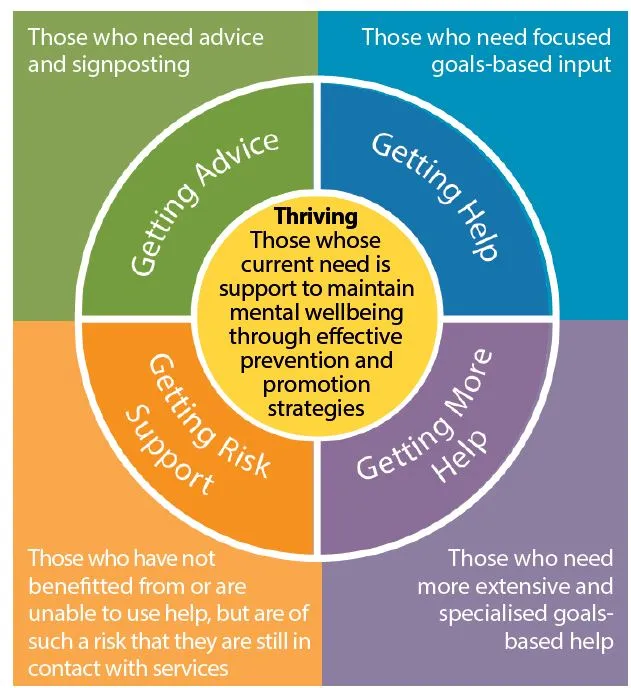
Our approaches for promoting wellbeing and supporting pupils who may have poor mental health include the following:
- The school achieved the "Healthy Minds Chartermark" for our school in 2023. This shows our school's commitment to support the wellbeing and mental health of everyone working in Education.
- The school works closely with the Educational Psychology team on a whole school Mental Health and Wellbeing action plan to further develop and support in school.
- Mrs Dewhirst, our Deputy, is now our Senior Mental Health Lead in school and, following a period of transition, she will be undertaking additional training on this.
- We have two trained Mental Health First Aiders (MHFA) in school: Mrs Macdonald and Mrs Dickerson who are available to support both the pupils and the staff.
- Mrs Janice Parfett is our named Governor for Mental Health and Wellbeing.
- We work very closely with the Mental Health Support Team (MHST) who will be working in school 1 day a week to support children 1:1, provide whole class workshops and to work with parents.
- Each class has pastoral support from their class teacher and the support staff within their phase.
- 1:1 or group support may be put in place with our Pastoral Manager, Mrs Macdonald, or our Mental Health First Aiders (as above).
- Each class has a "worry box" which enables them to self-refer themselves so they can confidentially ask for support from key adults in school.
- A course of 1:1 'Drawing and Talking' Art Therapy with our trained Art Therapist, Mrs Dickerson.
- Forest Schools sessions with our trained Forest School Practitioner.
- Weekly Wellbeing assemblies.
- Our school Wellbeing Warriors, trained and supported by the MHST, and working alongside peers, staff and governors, help develop provision and provide support for pupils and staff.
- We conduct regular questionnaires with pupils, staff and parents for feedback on the support and provision we provide in school for Mental Health and Wellbeing.
- Mental Health and Emotional Wellbeing sessions taught through our RSE curriculum.
- Learning about the Zones of Regulation develops emotional literacy and includes a focus on recognising emotions in themseves and others as well as identifying ways to 'get back to green' by regulating their emotions.
- Whole School collaborative and fundraising events.
More information on the Education Staff Wellbeing Charter can be found below:
Signs of depression or anxiety in children
Signs of depression or anxiety in children can sometimes look like normal behaviour, particularly in teenagers who are able to keep their feelings to themselves.
It's also natural for children or young people to feel stressed or anxious about things like exams or moving to a new school. But while these experiences can be very difficult, they're different from longer term depression or anxiety, which affect how a child or young person feels every day.
It can help to think about what's normal for the child if you have noticed signs that they have been behaving differently recently.
Signs of depression in children can include |
Signs of anxiety in children can include |
|
|
Helping a child with depression or anxiety
The most important think you can do is to reassure the child and not judge them for how they are feeling.
Ways to help a child who is struggling include;
- letting them know you are there for them and are on their side.
- try talking to them over text or on the phone if they don't feel able to talk about it in person.
- being patient and staying calm and approachable, even if their behaviour is upsetting to you.
- recognising that their feelings are valid and letting them know it is okay for them to be honest about how they are feeling and what it is like for them
- thinking of healthy ways to cope and things you could do together such as yoga, breathing exercises and other mindfulness activities.
- encouraging them to talk to a GP, someone at school, or even Childline. Especially if they are finding it hard hard to talk at home.
Emotion Coaching
Please see links below to an Emotion Coaching poster and guide. Emotion Coaching is a technique you can use to help your child cope and understand their thoughts and feelings.
Getting support for children's mental health
In school we support pupils well if they have any worries, anxiety or depression. Mrs Macdonald and Mrs Dickerson are Mental Health First Aiders and regularly support children and their families if we are concerned about a child.
Children who may be having problems are quickly identified in school. All staff have undergone Mental Health training and Attachment Trauma Training so they can quickly identify the signs of declining Mental Health and know how to act accordingly to support them. Many teaching and support staff also have an accredited qualification in Children and Young People's Mental Health. As a school we also receive support from the Bradford Early Help and the School Nursing Team who can be utilised to provide Mental Health support for the children
If you're worried about a child feeling suicidalWhile not every child with depression or anxiety will feel suicidal, sometimes mental health problems can feel overwhelming for children and young people. If a young person talks about wanting to hurt themselves, or they express suicidal feelings, they should always be taken seriously.
Signs that a child or young person may be having suicidal feelings or thinking about suicide, include;
|


